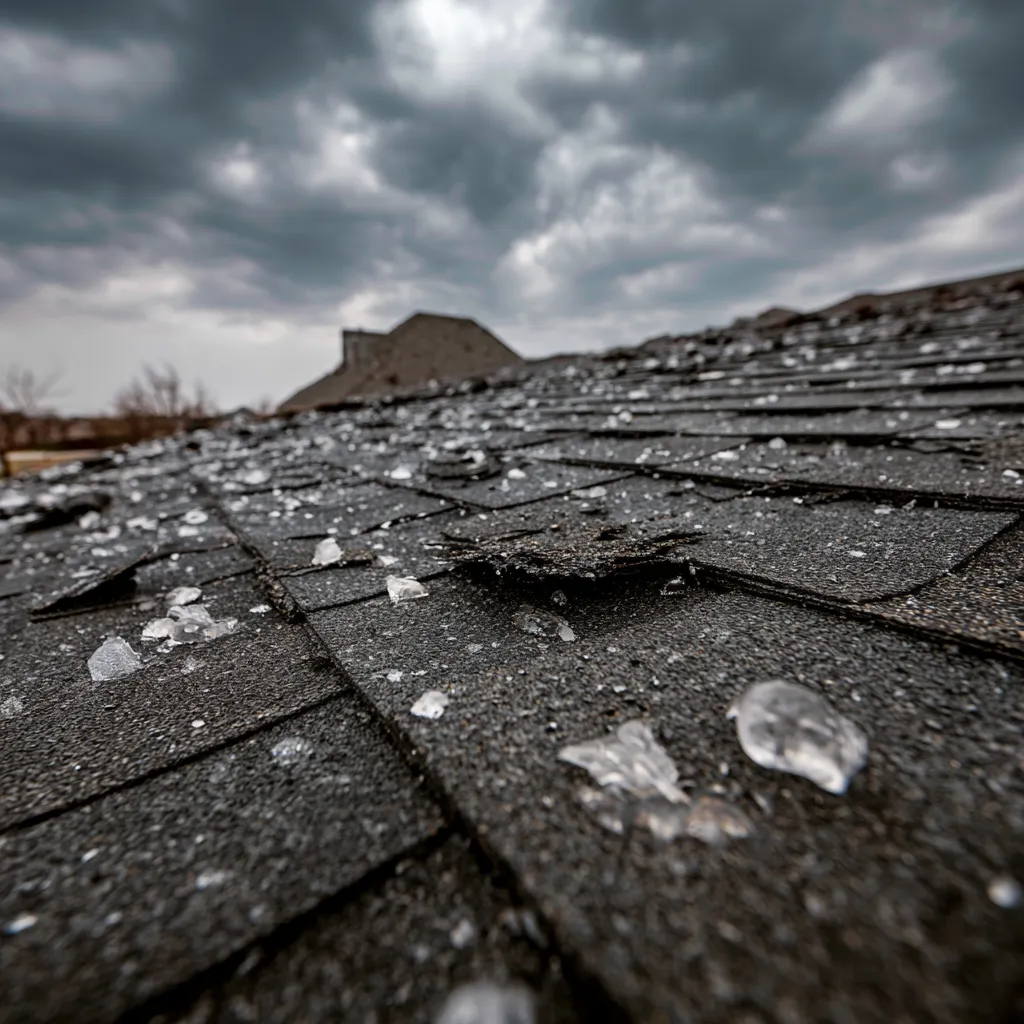
Tarrant County collects a hard run of hail most springs, and the county record logs golf-ball sized stones at Crowley on March 8, 2025. So the question after a storm usually isn't whether hail fell. It's whether what it did to your roof is worth opening a claim over, and that's a different question with a different answer.
Your deductible is the number that matters
The band a roof costs to replace isn't what you pay when a claim covers the work. Your deductible is, and the policy you already hold sets it. No roofer moves that figure, so it's worth reading yours before you decide anything.
That's why a one-slope repair can come in underneath the deductible and still be worth doing out of pocket. You'd be paying the same money either way, without a claim on the record.
What tips it the other way
Bruising and bare mat spread across several slopes is the field going together rather than one bad patch, and that prices like a replacement. Once you're there, the deductible is usually the smaller number and a claim starts making sense.
The catch is delay. A bruised shingle can look intact and keep water off for a good while before it lets go, so a roof that seemed fine after a rough spring can start dripping the winter after. Policies put a clock on claims and it starts on the date of loss, which is why a look soon after a storm is worth more than a look later.
How to find out without committing to anything
A roofer goes up, counts what's actually there, and writes it out. That visit costs you nothing and it doesn't put a claim on your record. What you do with the number afterwards runs on your own timetable.
And if the storm didn't really touch your roof, that's what you'll hear from Crowley Roofing Co. Nobody's expecting you to know the difference between storm damage and ordinary wear from the driveway; that's what our roofers are up there for.