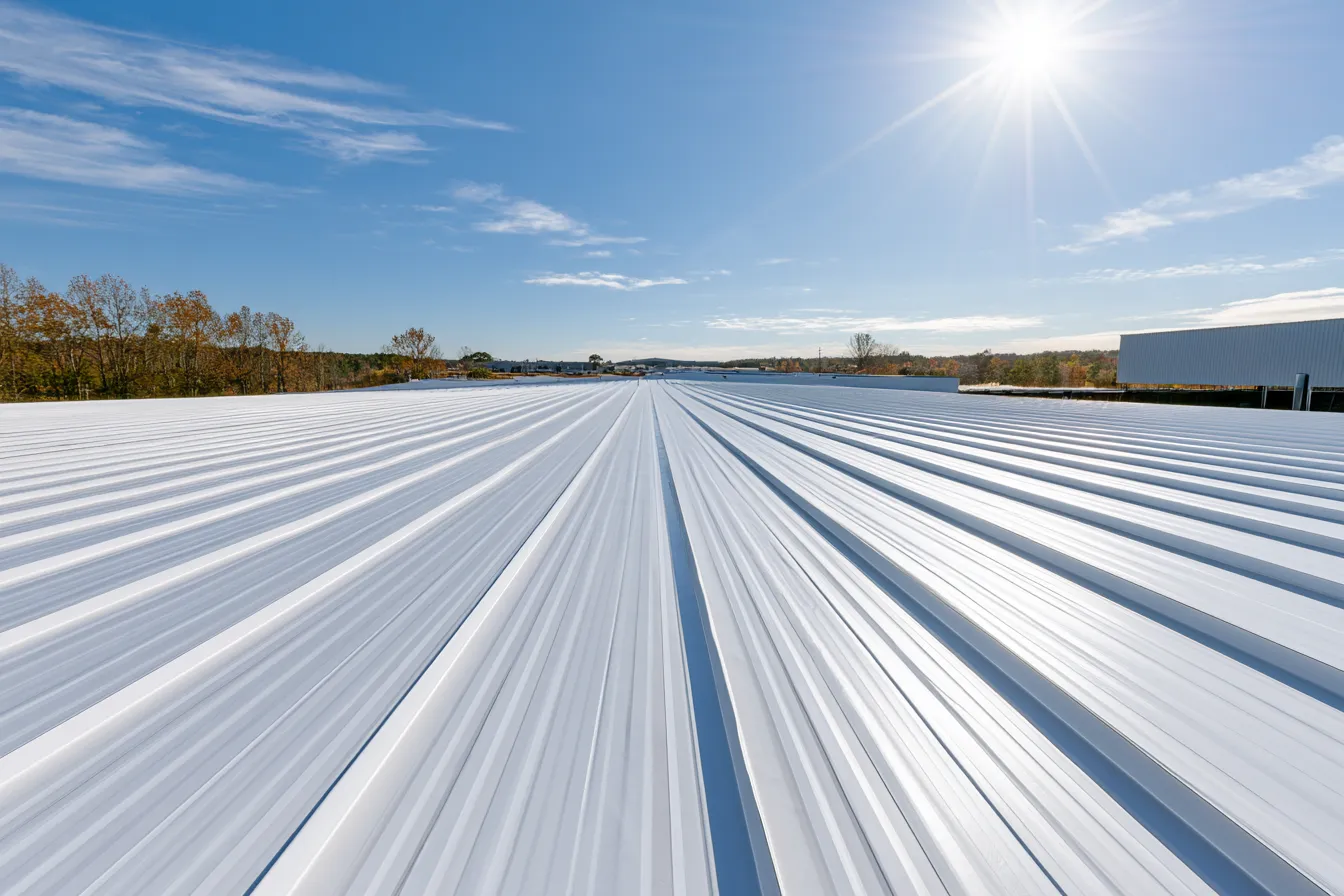
Metal Roofing in Crowley, TX
Standing seam metal roofing in Crowley, and whether it is worth the step up on your house.
Metal costs more than shingle, so you'll get the whole job itemized on paper at no charge before you weigh it against anything else.
Metal roofing in Crowley, what it takes
A metal roof outlasts two asphalt ones and costs more than both, so the question Crowley Roofing Co hears most about metal is whether your house is one that gets the money back.
What separates a metal roof that lasts forty years from one that gives trouble early is out of sight once the job is finished: solid decking under the panels, underlayment rated for the heat under metal, clips that let a panel move through a Texas summer, and hand-folded trim at every edge.
The county's four year storm record peaks at 105 mph of wind and a five inch stone, and metal answers those two in opposite directions. Standing seam is stronger in wind: the panels lock onto hidden clips down their whole length. Hail runs the other way, since a stone that fractures an asphalt mat often leaves a panel dented and still watertight. Four years of it sits on the storm page.
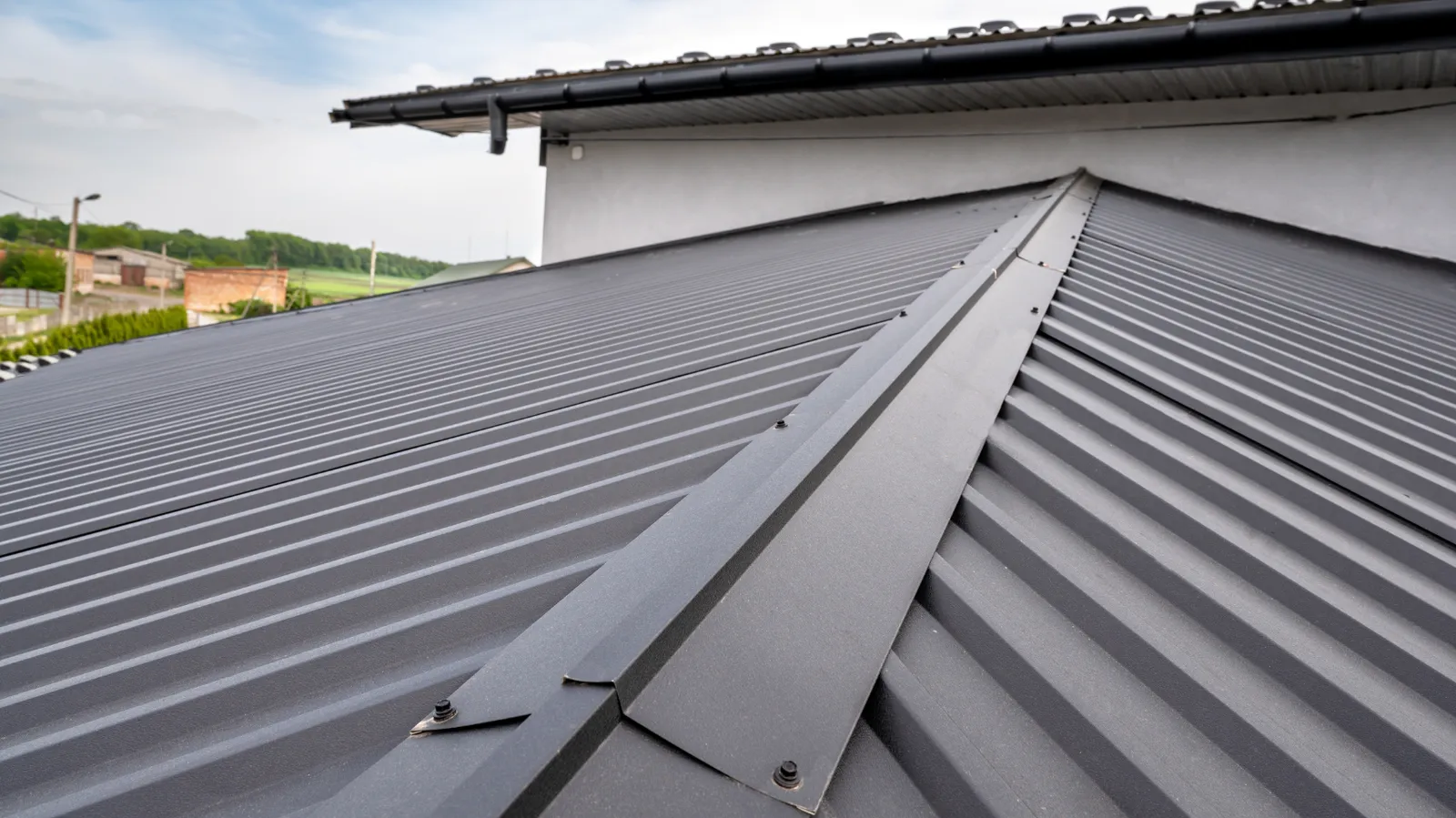
Down to the bare deck
The old covering, its felt and its flashing all come off first. Metal goes over a flat deck or it telegraphs every hump underneath it for the next forty years.
Sheathing made sound
Your roofer cuts out soft or delaminated plywood before a panel touches it. Shingle can hide a small dip in a deck, and a standing seam panel shows that same dip as a shadow line running the length of the slope.
High temperature underlayment
A synthetic sheet rated for the heat that collects under metal goes down across the whole deck. Ordinary felt bakes brittle in that space, and paying for the better sheet is one of the places a metal job costs more than a shingle job.
Concealed clips, no face screws
Standing seam panels fasten to clips hidden inside the seam, so nothing holding your roof down sits out in the weather. The exposed fastener panels you see on barns cost less and put a rubber washer at every screw, and those washers are what needs re-gasketing later on.
Panels cut to your slopes
Each run is cut to the length of the slope it covers, so the field of the roof carries no horizontal joint at all. That's where much of metal's water record comes from, and it's also why a cut up roofline costs more in metal than it does in shingle.
Trim, valleys and terminations
Our roofers bend and lap eave, rake, ridge and valley trim by hand at every edge of the roof. It's slow work, and on a finished metal roof it's where the leaks come from if any ever do.
The houses where metal starts adding up
Metal earns its price back on some houses and just costs more on others, and the difference is almost always something about the building itself. Steep pitch, long unbroken runs, a low slope that keeps failing, and how long you plan to be under it are what decide it.
You are staying put
Metal's whole case is a long-run trade, and it only closes if you're the one still living under it. One standing seam roof covers the span two asphalt roofs would, so the longer your horizon the better that trade looks.
A long, simple roofline
Standing seam is at its cheapest and its best on long unbroken runs, because each panel comes off the brake as one piece from ridge to eave. A roof cut up with dormers, hips and valleys turns into custom flashing work, and the price climbs with every cut.
A shallow slope that keeps failing
Shingle needs pitch to shed water and starts letting go on runs that sit close to flat. Standing seam locks at the seam instead of overlapping, so it holds on slopes where asphalt was always fighting.
Nothing upwind of the house
A house with open ground on its weather side takes wind at full strength, and you already know which kind of lot yours is. Concealed clips hold a metal panel down along its entire length. That's a different grip from an adhesive strip under each shingle course.
This would be the third roof
A house that has already been through two coverings is telling you something about its exposure. The third decision isn't the same one as the first, because the up front gap stops being the whole comparison.
A porch, an addition, a patio cover
The small near flat runs off the back of a house are where metal goes on for a fraction of what a whole roof costs. It's also the cheapest way to find out whether you like living under it, since the main slopes can stay in shingle.
Substrate, panels, fasteners, trim
A shingle roof is built in courses, and a metal roof is built in edges. The order below is what a standing seam job runs through, and the length of it depends on how many edges your roof turns out to have.
A roofer measures every run
Panel length is set by the slope it covers, so a satellite image can't produce it. Your roofer measures up on your roof, and the trim count comes off that same visit.
Everything above the sheathing goes
The old covering, its underlayment and its flashing all leave the property. What is left is bare plywood, and that's the only moment anybody will see the condition of it.
The deck sealed before any panel
A high temperature synthetic goes down over the whole deck, and your roofer seals it at the eaves and the valleys. That layer is the waterproofing until the panels are on, and it stays underneath as the backup afterwards.
Every edge closed by hand
Panels go up the slope on concealed clips, and then the slower half of the job starts at the eaves, rakes, ridge, valleys and every wall the roof runs into. A metal job runs longer than a shingle job on the same house, and most of the extra time is spent right here.
Metal money against shingle money
Figured on a 26-square roof, the planning size these totals assume. Metal spans a wide band, so a cut-up roofline can land well above this and a simple gable below it.
Standing seam runs $1,000 to $1,600 per square nationally against $450 to $690 for architectural shingle, so the gap is a multiple of the shingle price. What surprises people more is how wide metal's own band is. Panel gauge, seam type and the number of edges on a roof move a metal price much further than they move a shingle price, so two houses of the same size can land at opposite ends of it. Our roofers price both coverings on one estimate at no charge, line by line, so the difference is a figure you can sit with instead of a feeling about metal. The cost page carries all four coverings and what moves each one.
$1,000 to $1,600 per square · Standing seam, installed, from national ranges. A square is 100 square feet of finished roof.
National planning ranges, not a quote. Your roof sets the real number.
Metal questions from Crowley owners
Four of these come up before the estimate does, and the last one comes up right after somebody sees the price. Metal has genuine weak points and they are in here too.
Run the Crowley numbers both ways
Send your ZIP and roughly how cut up your roofline is, and one of our roofers prices both coverings on the same page.