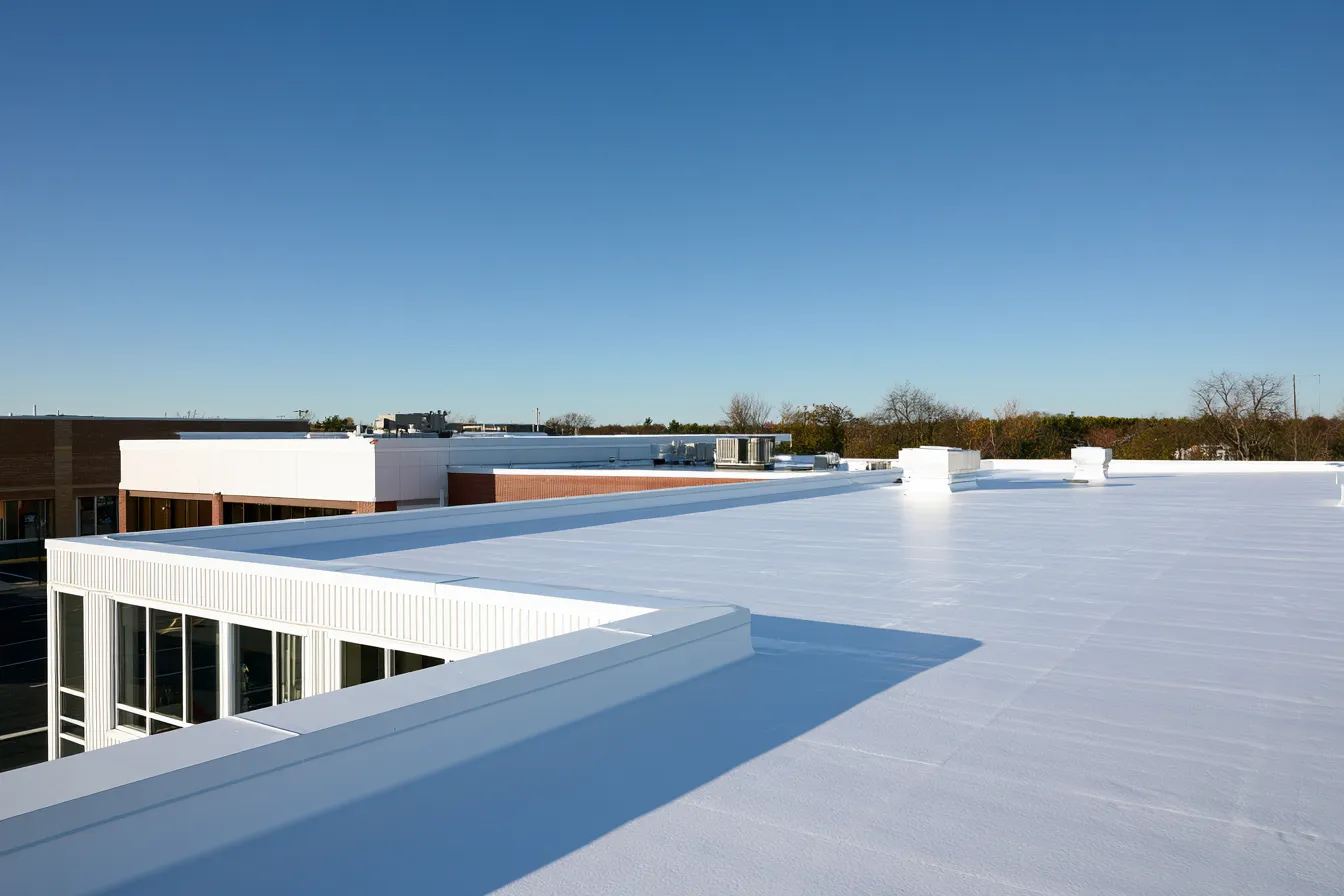
Commercial Roofing in Crowley, TX
Commercial roofing in Crowley for buildings that cannot close for the day.
Say what the building is and what the roof has cost the business. Our commercial roofers price all of it, trading hours included.
Commercial roofing in Crowley, TX
A ceiling tile darkens over a tenant's stockroom. What that turns into is a question about stock and about the lease.
Low-slope roofs fail at the joints and the low spots. Ponded water, a loosened seam, flashing off a parapet: found early, most are still a repair.
That is the hard part. Ask Crowley Roofing Co and one of our commercial roofers goes up, because a membrane hides what the parking lot never shows.
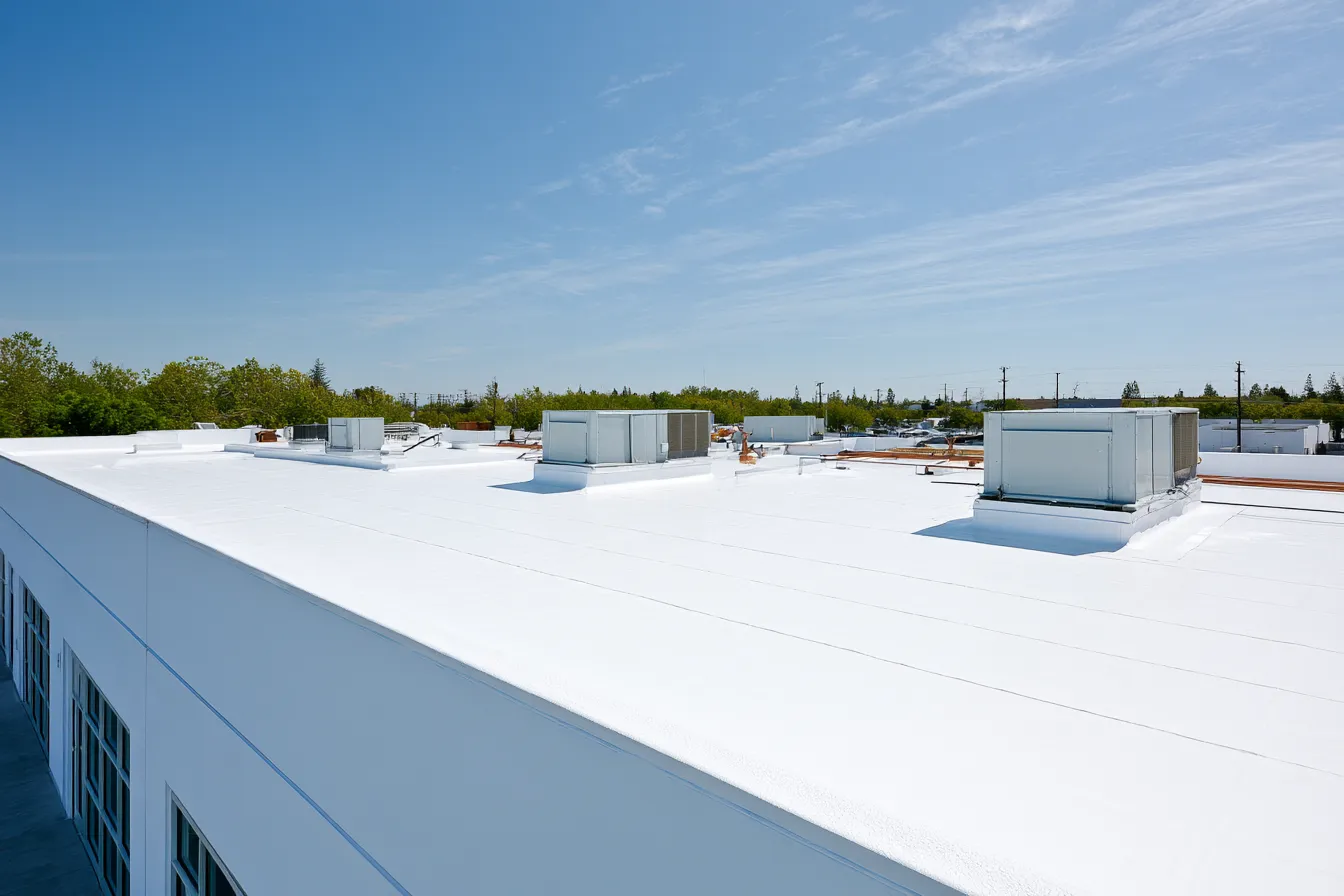
What a Crowley commercial job covers
Before it's a roofing question, a commercial job answers how the building keeps trading: where a truck stands, which hours are usable, how much roof opens at once.
A membrane can look serviceable and still lie on insulation wet for years, and that one fact decides between a coating and a full tear-off.
Wind is the other half. On a low-slope roof it lands on the edge metal, so the survey looks hardest at the perimeter.
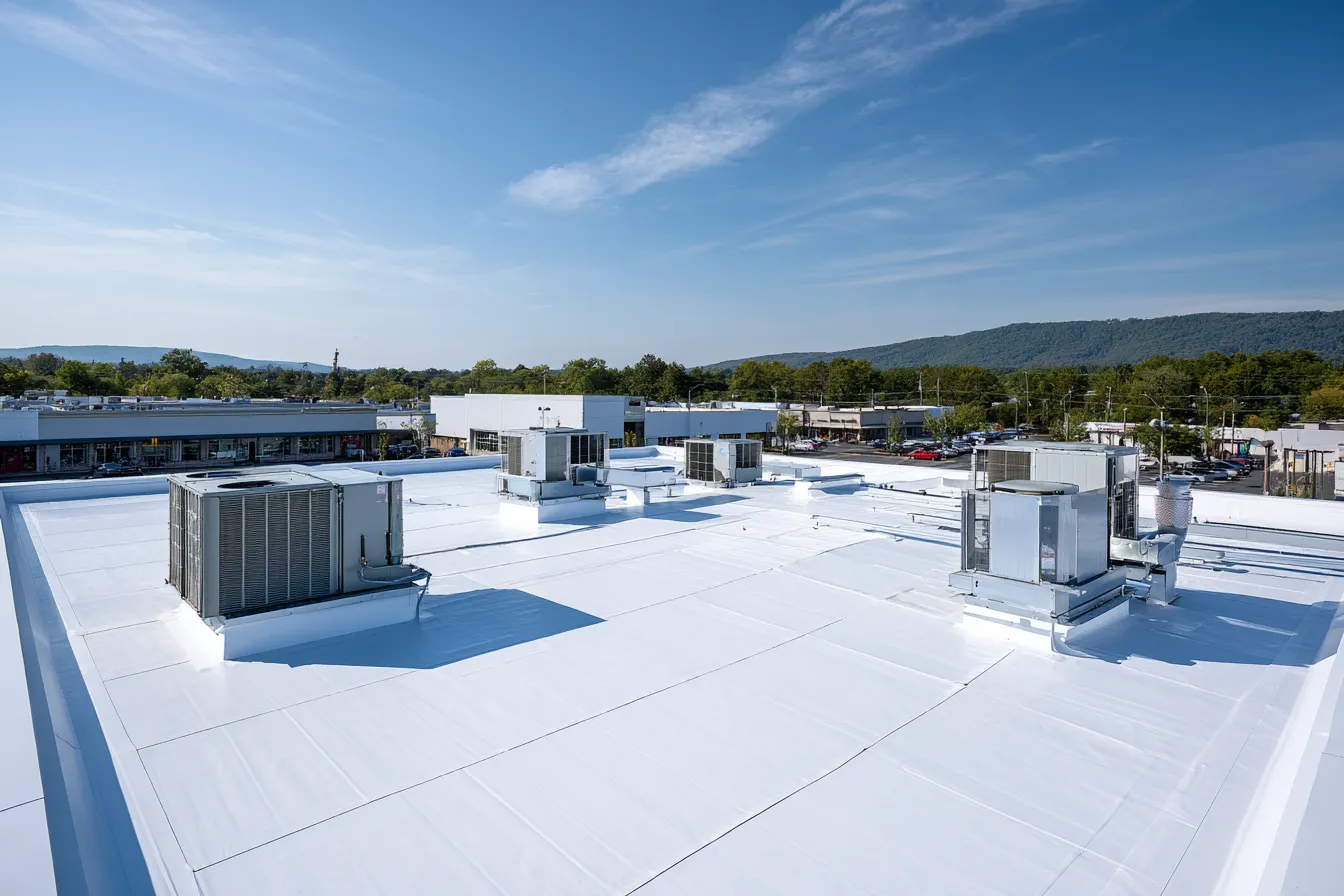
The whole roof surveyed
A roofer covers every drain, curb, seam and parapet, including the stretches nowhere near where the water showed up. The photographs come back dated, so the condition of the roof is on record before anybody agrees to anything.
Moisture read under the membrane
Wet insulation is invisible from the surface and it changes the whole job, so a roofer tests for it instead of assuming either way. A dry deck keeps a recover or a coating on the table; a saturated one takes them off it.
Drainage and the overflow path
A roofer treats the drains, scuppers and the fall of the roof as one system, because a roof only ponds when the water has nowhere to go. Standing water is heavy as well as corrosive, so the overflow route earns as much attention as the primary drain.
Every penetration detailed
Rooftop units, vents, pipes and skylights each need metal cut and sealed by hand, and every one of them interrupts an otherwise continuous surface. A cluttered roof takes far more of the labor than an open roof of the same area.
Access, hours and staging
Where the truck stands, which entrance stays clear, which hours are usable and where the debris goes all go into the paperwork before the first load arrives. On an occupied building those are not site details, they are the difference between a job that interrupts trade and one that does not.
Both coverage documents named
A commercial roof is covered twice over: the membrane manufacturer's warranty on the material, and our roofers' workmanship warranty on the installation. Both sets of terms arrive alongside the figure, with the program the roof qualifies for named instead of implied.
Membrane systems set against each other
Five systems cover most of what goes on a low-slope roof, and the choice between them turns on your building and how you use it more than on any brand name. They are set side by side here on the terms an owner decides on, with metal sitting outside the membrane world where the slope allows it.
| System | What it is | Where it fits | Service life |
|---|---|---|---|
| TPO | One welded plastic sheet, usually white, seamed with heat. | The most common single-ply on commercial buildings, and the usual pick where a reflective surface helps the cooling load. | Roughly 20 to 30 years |
| EPDM | A synthetic rubber sheet, classically black, with a long track record. | Flexes well in cold weather. Its seams are the part that earns the attention. | Roughly 20 to 30 years |
| PVC | A welded thermoplastic sheet, close cousin to TPO. | The right pick over a kitchen or anywhere grease and oils reach the roof, because it resists them. | Roughly 20 to 30 years |
| Modified bitumen | Asphalt in reinforced rolls, laid in layers. | A tough, puncture-resistant workhorse for smaller low-slope roofs and roofs that get walked regularly. | Roughly 15 to 20 years or more |
| Fluid-applied coating | A liquid layer rolled or sprayed over the roof already there. | Only where what is underneath is dry and sound. Over wet insulation it seals the water in. | Commonly warranted 10 to 20 years |
Service life is always a range. How the system is attached, how much foot traffic the roof takes and whether the drains stay clear all move it by years.
Phasing work around an occupied building
An occupied building sets the sequence here, and the roofing follows it. Hours the business cannot give up get named before a truck ever arrives, and the roof comes apart in pieces small enough to put back the same working stretch.
The roof, then the rooms under it
A roofer covers the whole surface and then the spaces underneath, because on a working building what sits below the leak decides how urgent the repair is. Both halves go on paper before anybody names a system.
Access, hours and staging
The written plan of work names the standing spot for the truck, the route the material takes up, the usable hours and where the debris lands. None of that turns up as a surprise on the first morning.
Bay by bay, dried in behind
Our roofers open no more of the roof than they can dry in again before they come down. That single rule is why a tenanted building can trade through a tear-off at all.
Terminations, drains, handover
The last pass is detail work: terminations at the parapet, curbs re-flashed, drains cleared and run with water to prove they take it. The paperwork closes the job, with the manufacturer's program on the material and our roofers' workmanship terms beside a dated record of what was found.
What Crowley property managers ask
These come up once an owner decides to act. The cost reaches the building as well as the roof.
Get the Crowley building surveyed
Send what the building has been putting up with, and nothing is decided until the work and the figure are sitting in front of you.