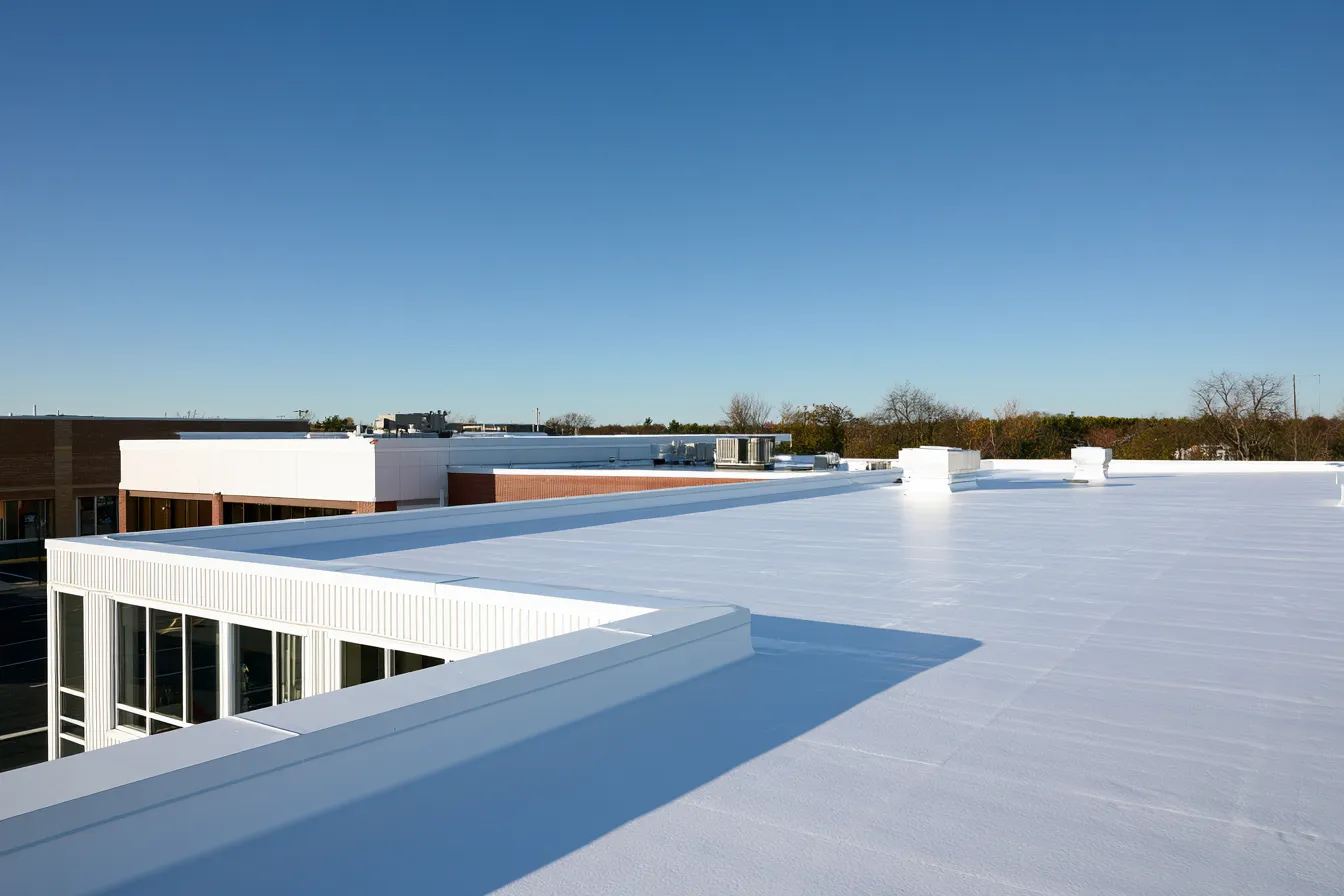
Flat Roof Repair in Crowley, TX
If a low-slope section of your roof is leaking, that is flat roof repair.
Our roofers look at what you send before anybody talks about price.
What a Crowley flat roof repair involves
Almost no house in Crowley has a flat roof. What you've got is a low-slope section over a porch or a back addition, and its tie-in to the pitched roof beside it lets water in far more often than the middle does.
So why is water still sitting on yours two days after the rain stopped? A low-slope roof doesn't shed, it drains, and two things stop it draining: the surface has lost the fall that sends water somewhere, or the water has fall and no way off. A shop roof gives out the same way on a bigger scale, and that job lives on the commercial roofing page.
A patio cover or a sunroom usually arrives years after the house does, so the flat part over your back door is often a different age and system from the roof over your bedroom. Crowley Roofing Co starts there, because the system decides the repair.
Naming what is up there
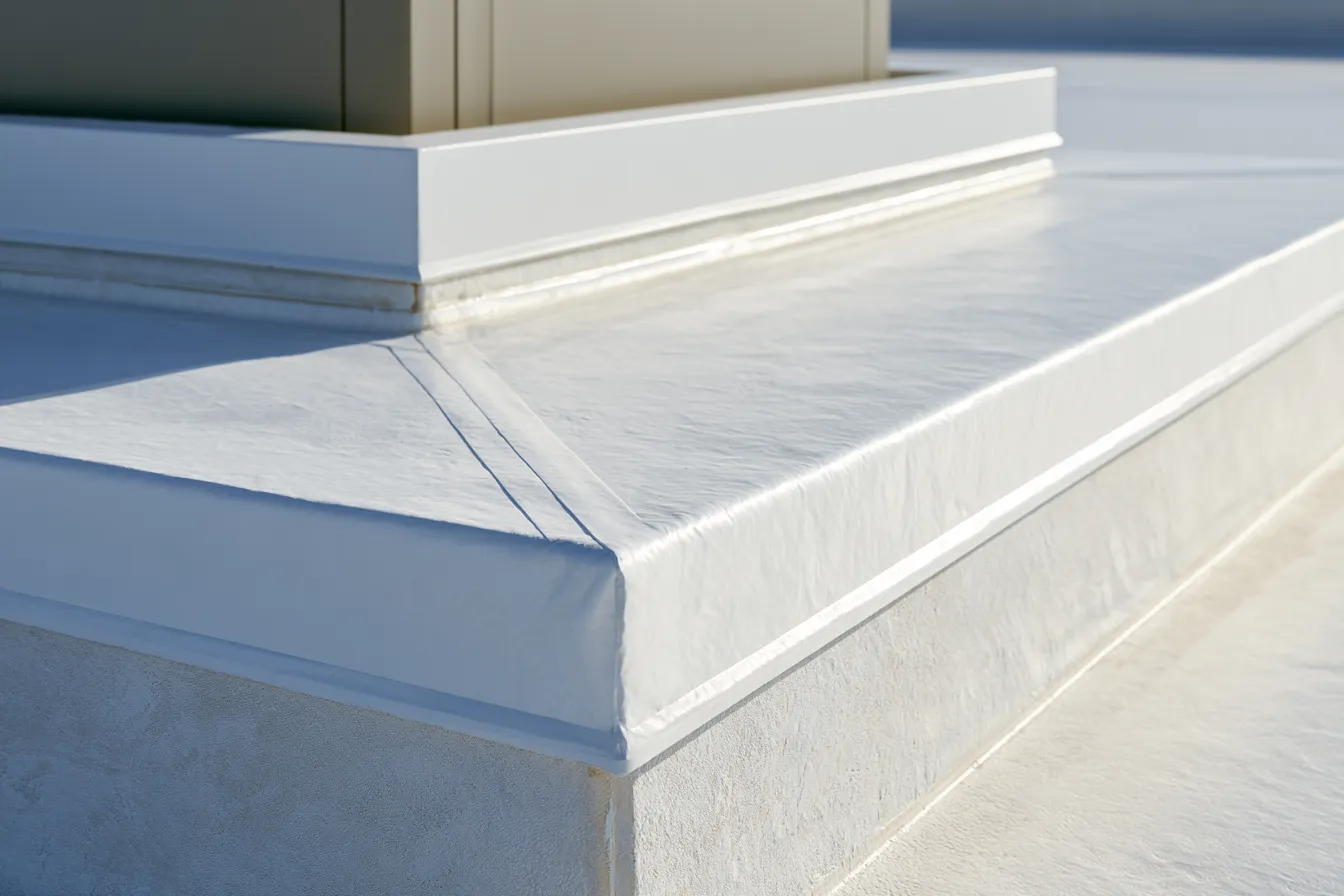
Your low-slope section could be any of several very different materials, and the repair changes with each one. Your roofer settles which you have before pricing anything, because a welded sheet, a rolled asphalt system and a coated deck each give out in their own way.
Reading the fall
A hose run across the surface shows where water goes and where it stops. That reading separates a section that has lost its fall from one draining perfectly well everywhere except at the blockage.
The way off the roof
Every low-slope roof needs an exit, whether that's a drain, an open edge or a scupper, which is simply an opening cut through the low wall at the edge. Your roofer clears it, checks the backup route still works, and looks at where the water lands once it's out.
The tie-in to the pitched roof
Where the flat part butts into a wall or into the slope above it, metal has to be layered in behind the siding or under the shingles. That junction is the most common way into a house from a low-slope roof, and sealant smeared over the joint hides it for about a season.
What the water left behind
Boards and insulation under a flat section can stay wet long after the surface itself is patched. Your roofer opens the wet area, photographs what is under there on your roof, and puts those pictures in front of you before anything gets closed back up.
The workmanship term
Our roofers carry a workmanship term on low-slope work, and yours is typed onto your estimate as a dated line you keep. A seam weld and a rebuilt section are covered for different lengths of time, so that line names which of the two your job was.
Why water sits where it should not
Water standing up there isn't automatically a problem, and knowing which is which saves you a phone call. These are the ones worth a second look, and most of them show from an upstairs window or the top of a step ladder.
A puddle still there two days on
Rain that hasn't drained or dried off within about forty-eight hours is ponding, and that's the working line the trade uses. Standing water is heavy, and it works on a sealed surface far harder than a wet roof that clears by morning.
A dirt ring on the surface
Water leaves a dark outline where it stood, so the low spot shows itself even on a dry day. Find the ring and you've found where the fall has gone, without waiting for the next storm to prove it.
Bubbles under the surface
A blister is air or moisture trapped in or under the sealed layer, pushing it up into a soft dome. One or two are worth watching; a field of them says something has been getting in for a while.
A stain on the addition ceiling
The room under the flat part shows it first, usually as a soft brown patch out near a wall. Where that patch sits tells your roofer very little on its own, because water under a flat deck travels sideways before it ever drops.
A wet line where the porch meets the house
Water running down the siding under that junction points at the metal layered in behind it rather than at the flat part itself. That flashing is the single most common way in on a porch or an addition roof.
An outlet that never runs
If the drain or the edge opening stays dry while water sits behind it, something is blocking the way off. Leaves, a nest, or sealant left over from an older repair will all do it, and clearing it costs a fraction of what the other answers do.
Find the system, then the failure
Nobody can price your low-slope repair without knowing what's up there and why the water stopped moving. Your roofer works those out in that order, and the order is what keeps a patch from landing in the wrong place.
Name the system first
Your roofer settles what your surface is before anything else. A membrane is one sealed sheet, welded or glued into a single skin; modified bitumen is asphalt in heavy reinforced rolls, torched down layer over layer; a coating is a liquid film rolled over whatever was there before. Each one takes a different repair.
Watch where the water goes
With the system named, water goes back onto the roof deliberately. Your roofer watches where it runs, where it stalls, and whether the outlet takes it, and that is what tells a fall problem apart from a blockage.
Lift the suspect detail
Seams, the tie-in metal and the collar around any pipe come up next, because a low-slope roof gives out at those long before it gives out in the open field. The opening shows itself once the layer over it is off.
The two answers, priced apart
Clearing a blocked exit is short work. Giving a dead-flat deck its fall back is a build, so they land as two separate lines with two separate numbers, and yours is whichever one the water turned out to be.
Slope problems and outlet problems price apart
Two porches with the same puddle can price a long way apart, and the split is whether the water has no way off or nowhere to fall. Clearing a silted drain, re-detailing a scupper or welding a lifted seam back down is the smaller half of this trade, and nationally that kind of low-slope repair mostly lands between $400 and $1,900. Giving a dead-flat deck its fall back is the other half, because tapered insulation or fresh framing means the section comes apart and goes back together, which moves it into partial-replacement work at a national $2,000 to $8,000. Which of the two is settled on the roof, and what a full roof runs is worth having beside it.
Clearing the water off costs one thing; giving a dead-flat deck its fall back costs another.
National planning ranges, not a quote. Your roof sets the real number.
Low-slope questions around Crowley
These are the ones people ask while they're still standing in the yard looking up at it. None of them needs a roofer on site to answer.
Get the Crowley flat section checked
Say which room is showing it and roughly how big that flat section is, and the figure comes back to you with nothing needing an answer that day.