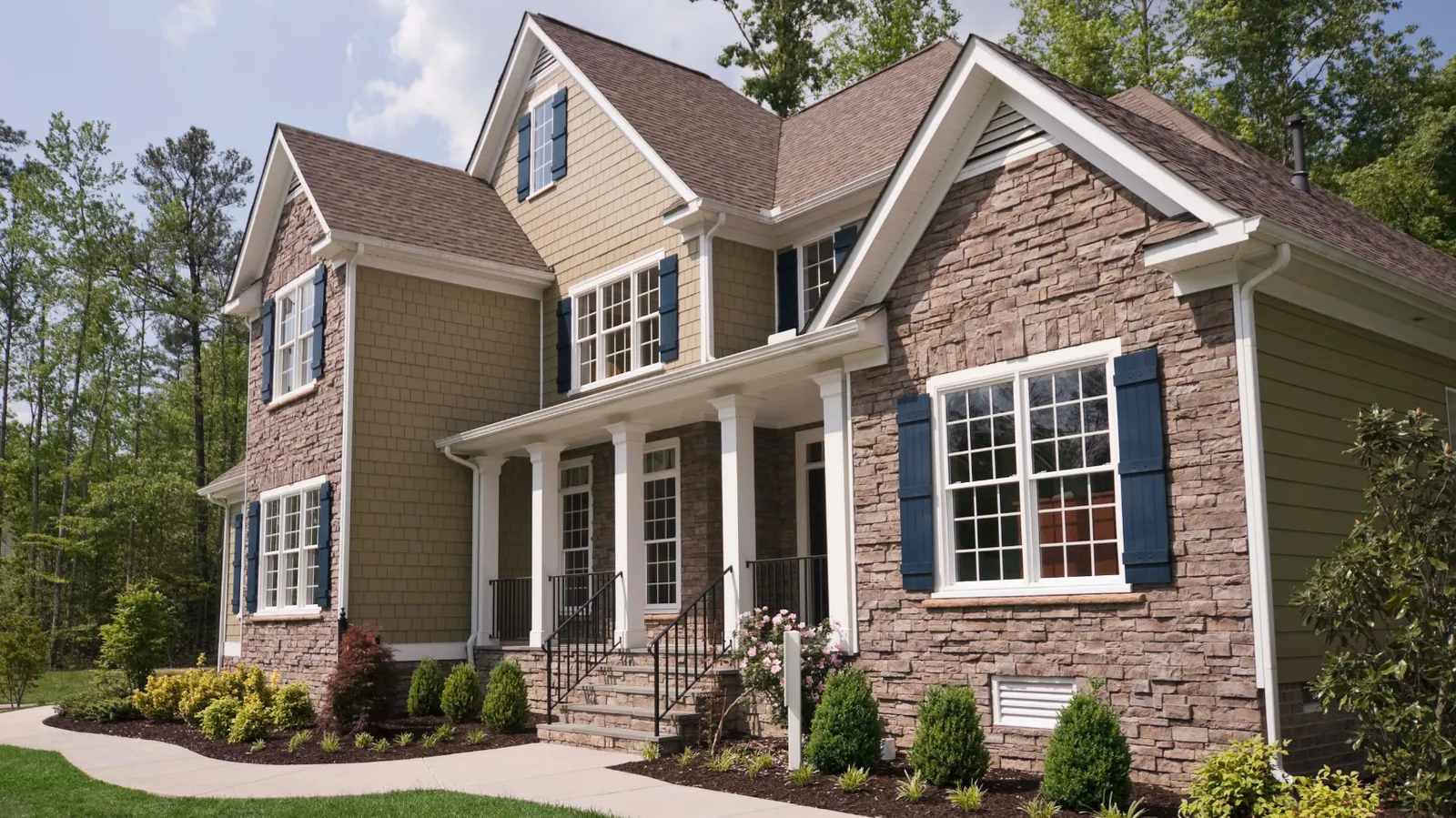
Gutter Installation in Crowley, TX
Gutter installation sized to your roof, and a look at the old ones first.
You can ask what a new run would take and stop right there.
Gutter installation in Crowley, start to finish
Water is coming off the roof somewhere it shouldn't, and you're trying to work out whether that's the gutters or the roof itself.
Take the back corner of a house after one of spring's short, hard downpours. Water sheets over the front lip instead of running along it, and by morning a channel is cut into the bed underneath. That corner means one of three things: the trough is undersized, the fall to the outlet has gone, or the outlet is packed.
Crowley sits flat at 761 feet, with no creek bottom or ridge taking a share of the runoff. Whatever comes off your slopes is settled at your own house.
The old run matters on its way out too. Aluminum holds a dent long after a shingle has weathered its own mark, so once the trough is in the trailer that record goes with it, which is worth knowing if hail has been through recently.
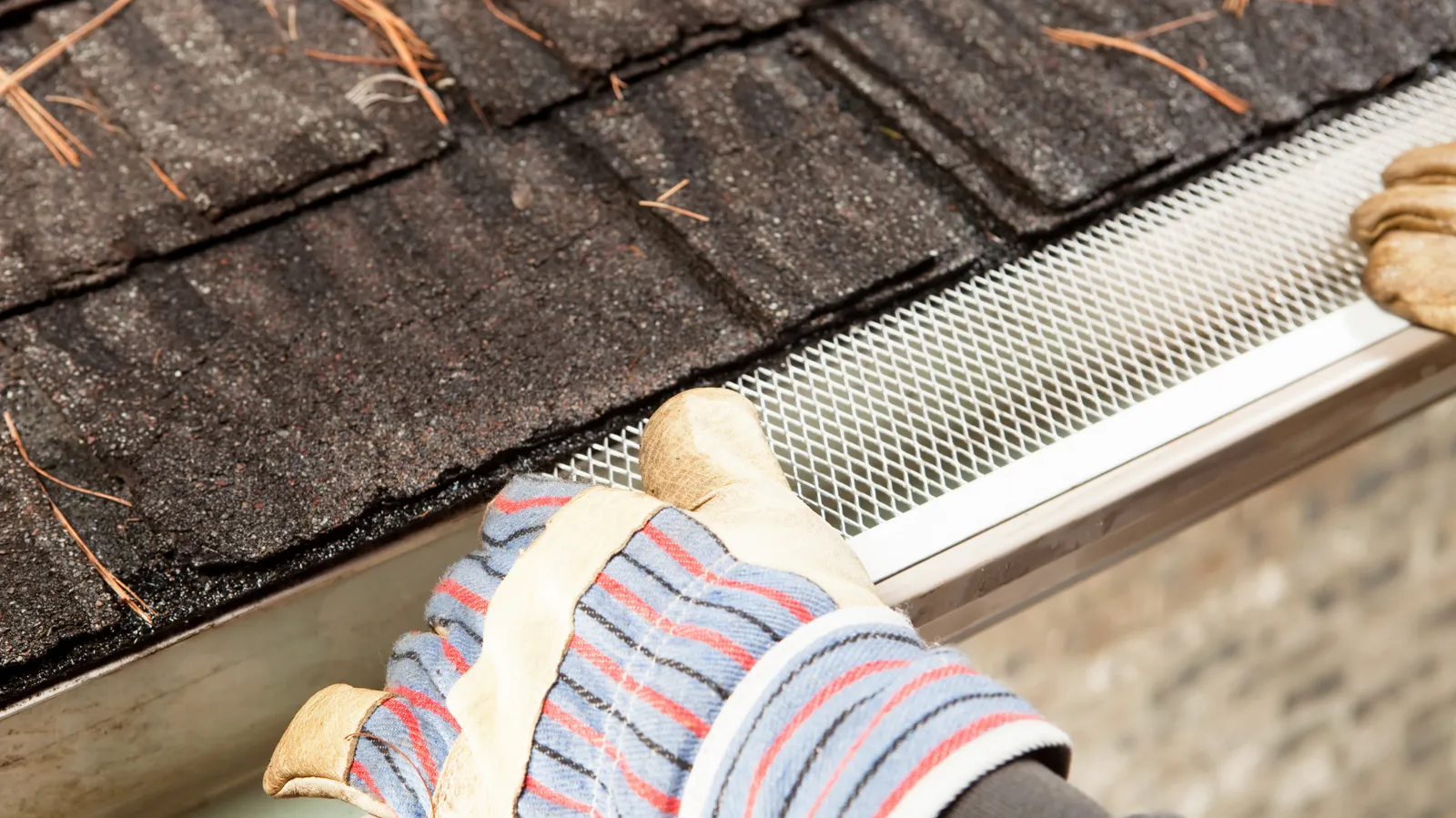
The old run comes off
Your roofer photographs the old trough before it comes down. Dents are dated evidence.
The board behind it
The fascia comes first. New gutter on soft wood fails early, whatever the metal.
The handoff at the edge
Water leaves the shingle, crosses the flashing, lands in the trough. Never behind it.
Runs formed at the house
A roll former makes your runs on site. Joints only at corners and outlets.
Downspouts and their outlets
Outlet count comes off the roof area feeding it. Too few and it overflows.
Where the water lets go
Downspouts end clear of your slab. On flat ground the extension does that work.
What failing Crowley gutters look like
Every one of these shows from the ground. Each is water going where the trough should have taken it.
A channel cut in the bed
Runoff off the lip digs a line in your bed. Mud up the siding too.
Gray lines down the front face
Grime came over the lip with the water and stayed there. It is an overflow mark.
The line dips between hangers
Fasteners are pulling out of the board behind it. Usually the wood is the problem.
Water sitting in the trough
Days after the rain it still hasn't drained. Lost fall or a packed outlet.
One downspout on a long run
A big trough with one small outlet still backs up. Count them along the back.
Stains under the soffit panels
Water is working behind the trough and into the eave. That's an attic question now.
Measure, size, hang, then test the fall
Most houses are one visit. What stretches it is your corner count more than the size of the roof.
Every run, on the house
Your roofer measures fascia length, corners and outlet spots. Satellite images miss all three.
Five inch or six
How much roof feeds the run, its pitch, the rain here. Not the shelf.
Old run off, new run up
Old aluminum down, soft fascia replaced, new trough up. Sound wood or it waits.
The fall, with a hose
Water proves each trough reaches its outlet. Nobody eyeballs a quarter inch of fall.
What moves a gutter figure by the foot
Gutters price by the foot, so your roofline shape moves the number more than house size does. Seamless aluminum sits at $6 to $15 per linear foot installed in national market ranges, and a whole house at roughly 150 to 200 feet of it lands near $2,000 to $5,000 on the same basis. What moves you inside that: how many corners the roofline turns, how many outlets the roof area calls for, one story or two, and how much fascia has to be rebuilt first. Our roofers itemize the footage, the outlets and any wood work as separate lines, so you can see which part of the number is gutter and which part is the roof above it.
Seamless aluminum installed. Downspouts, guards and fascia repair price separately.
National planning ranges, not a quote. Your roof sets the real number.
Gutter questions owners raise here
The first two come up before a tape touches your house. The last arrives with a roof quote.
Have the Crowley runs measured
Name the corner that's overflowing, and your roofer measures the runs and walks you through what each part of the number covers before you decide anything.