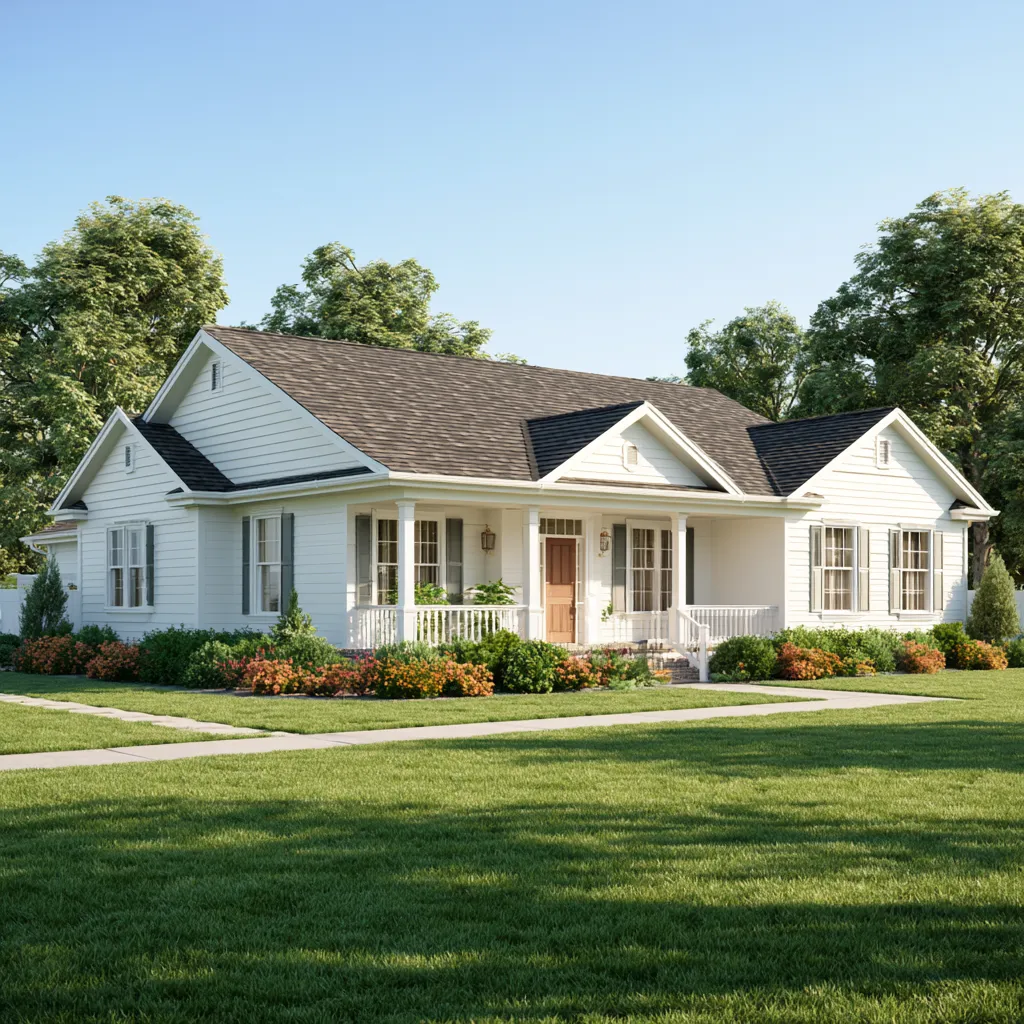
You'd expect the houses on one street to need roofs at roughly the same time, and in a town that went up in a single burst they mostly would. Crowley didn't go up in a single burst. Half the houses here are newer than 2002, and the rest are not, so the roof two doors down can be a completely different question from yours even when the two houses look like a matched pair from the curb.
Same street, two different clocks
What a roof has taken matters more than the year it went on. A roof that's been through four hail springs has spent more of itself than one that's been through one, and around here those two roofs can sit forty feet apart. That's the part the calendar won't tell you.
It also means a neighbor's replacement isn't a signal about yours. If theirs came off last spring and yours looks fine, both things can be true at once, and neither one settles what's happening on your slopes.
What actually decides which roof goes first
Exposure does most of it. West and south slopes take the afternoon sun and the front edge of most storms crossing the prairie, so on the same roof they'll usually age ahead of the north side. A street on open ground and a street under grown trees aren't handing their roofs the same weather either.
Then there's what the shingle was rated for. An impact rated shingle and a builder grade one come off the same storm in different shape, and on a house built in a boom year the builder grade was often the one that went on.
How to tell where yours sits
From the driveway you can see more than people expect. Sight along the eave the way you'd sight along a plank and look for a line that used to be straight and now dips. Look at the ridge against a bright sky for caps that have turned or gone. If the garage door has dents in it, the roof took the same stones.
None of that settles it, and it isn't supposed to. Send Crowley Roofing Co what you saw and our roofers work out what it adds up to, which isn't something you should have to get right from the curb.